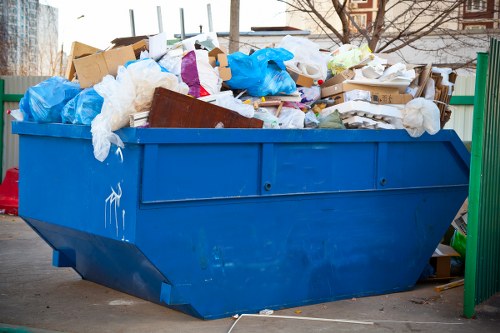
Health and Safety Policy for Garden Clearance Camden Town
This Health and Safety Policy sets out the commitments and standards for a professional garden clearance service operating in and around Camden Town. The policy applies to all staff, contractors and subcontractors engaged in garden waste removal, garden rubbish clearance and related landscape clearance activities. Its primary objective is to prevent injury and ill health, protect the public and the environment, and ensure that every job for garden clearance in Camden Town is managed with robust safety controls. The company recognises that effective rubbish removal and garden waste management require clear rules, training and consistent monitoring.
 This policy is relevant to all operational areas of garden clearances, including boundary hedges, composted material, soil and turf removal, bulky garden waste collection, green waste recycling and general waste disposal. It is also applicable to works involving clearance of overgrown plots, pruning debris, and the removal of discarded items such as old furniture and non-hazardous household junk. The aim is to maintain safe systems of work for each task and to ensure that garden rubbish removal in Camden Town is carried out without undue risk to staff, residents or the public.
Responsibilities and Accountability
Senior management holds ultimate responsibility for health and safety and will ensure appropriate resources are available for safe garden clearance operations. Site supervisors must implement risk assessments, issue instructions and confirm that operatives and crew members understand their roles. Individual workers are responsible for following safe working procedures, using protective equipment correctly and reporting hazards or incidents immediately.
Key responsibilities include:
- Management: provide policy, systems, training and oversight for Camden garden clearance work.
- Supervisors: carry out site-specific risk assessments and ensure safe work plans are in place.
- Operatives: use PPE, follow safe lifting techniques and maintain tools and equipment.
- All staff: report near misses, hazards and incidents without delay.
Risk Assessment, Planning and Safe Systems
 Before any clearance commences a documented risk assessment will be completed for the site. Assessments consider uneven ground, deep vegetation, hidden trip hazards, invasive weeds, wildlife, manual handling loads and the presence of sharp objects or glass. Where there is suspected hazardous waste or materials requiring specialist handling, such as contaminated soil or unknown chemical containers, work will stop and an authorised disposal route will be arranged rather than attempting on-site removal.
Training, Competence and Personal Protective Equipment (PPE)
All operatives will receive training appropriate to their role in garden clearance and rubbish removal. Training covers safe use of hand tools, wheelbarrows, powered garden machinery, chainsaws, shredders and vehicular loading and unloading. Essential PPE for garden clearance tasks includes:
- Hi-visibility clothing and durable footwear
- Protective gloves, eye protection and hearing protection where machinery is used
- Cut-resistant clothing and leg protection for chainsaw operations
- Dust masks or respirators if dust or airborne spores are likely
Equipment is inspected regularly and maintained according to manufacturer guidance. Faulty or damaged tools are removed from service until repaired. Safe systems of work include formal handover briefings, supervision during higher risk tasks and clear exclusion zones when machinery operates.
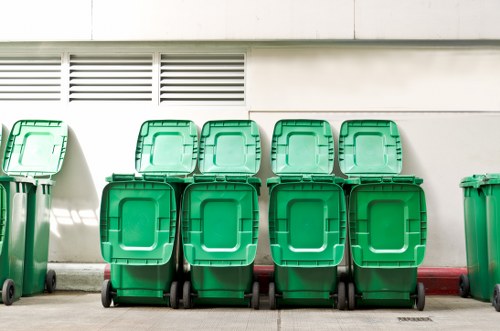
Handling Waste, Segregation and Environmental Controls
Waste collected during garden clearance is segregated into recyclable green waste, general rubbish and any special waste streams that require authorised disposal. Recycling and reuse are prioritised where possible. Vehicles used for rubbish clearance are loaded to safe limits and secured to prevent spillage during transit. Spill kits and containment methods are available on site to manage fuel, hydraulic fluid or other accidental releases. The company complies with permitted disposal and transfer processes for garden waste, using authorised facilities and ensuring accurate waste documentation.
Hazardous items such as solvents, asbestos-containing materials or pesticides are not handled by general clearance teams; these are referred to licensed hazardous waste contractors. Where such materials are discovered, the area will be cordoned off and procedures enacted to protect operatives and the public.
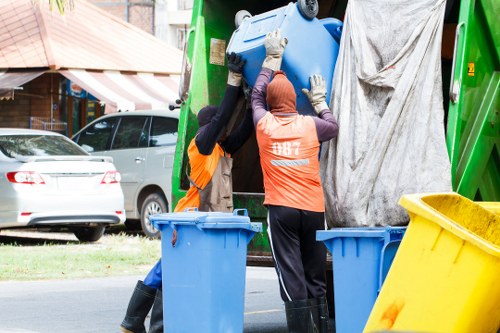
Emergency Procedures, Incident Reporting and Continuous Improvement
Emergency arrangements are in place for first aid, fire, medical incidents and other unforeseen events during garden clearance. All crews are briefed on emergency contact routes, nearest medical facilities and on-site first aid provisions before work begins. Incidents and near misses are recorded, investigated and used to inform changes to procedures and training to prevent recurrence. This policy promotes an open reporting culture and a commitment to learning from events.
Monitoring and review are ongoing. Regular site inspections, toolbox talks and audits ensure compliance with the policy. The health and safety policy for garden clearance Camden Town will be reviewed annually or following significant changes in operations, equipment or legislation. Management will set measurable objectives for reducing accidents, improving safe working practices and enhancing environmental performance.
Commitment: the organisation will take all reasonably practicable steps to ensure the safety and welfare of employees, contractors and the public while delivering garden clearance, green waste removal and domestic rubbish clearance services. Maintaining clear, documented procedures and promoting a safety-first culture ensures that every clearance is completed responsibly and professionally.